
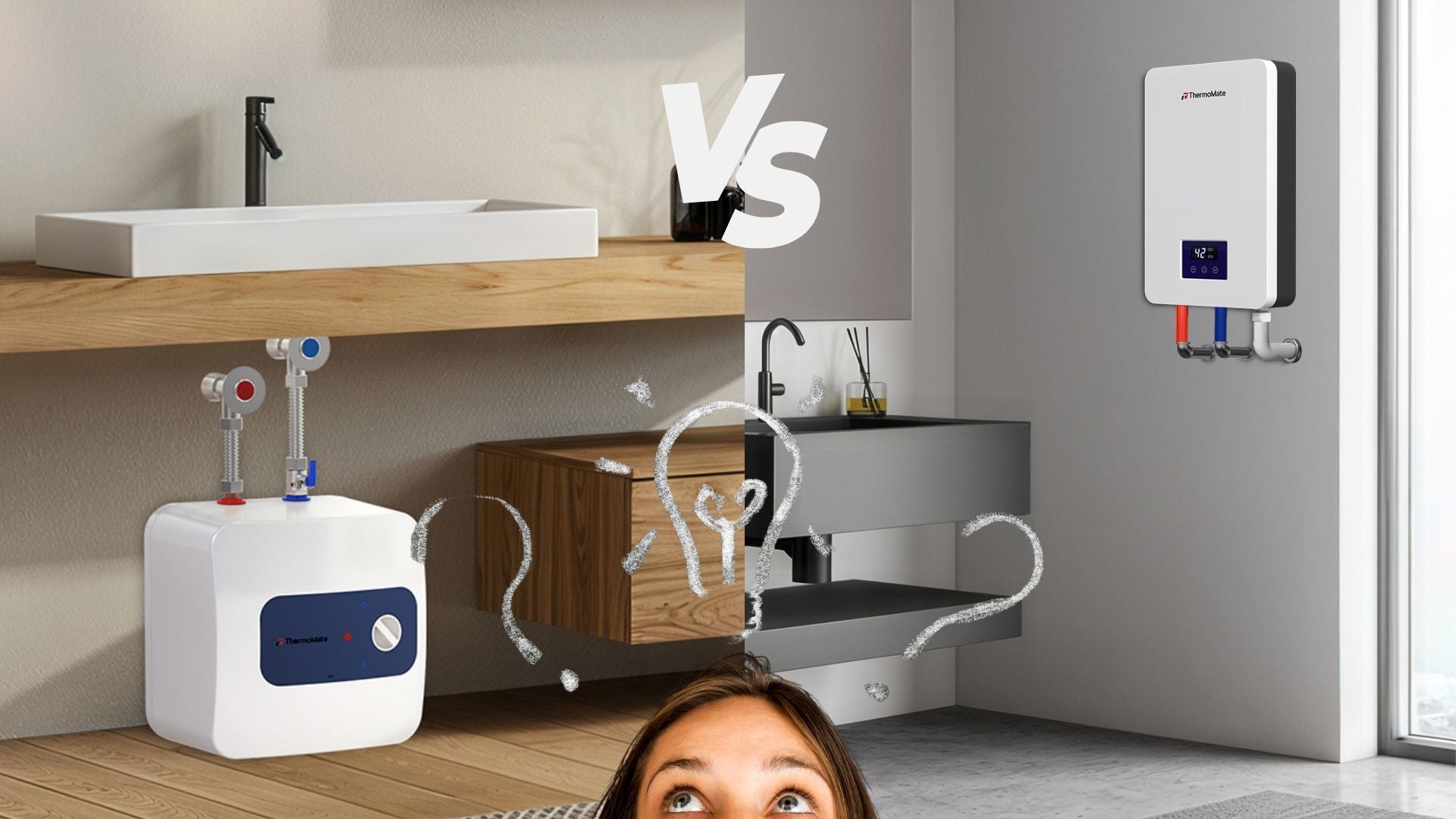
Most of us hardly ever think about our boiler or tankless water heater – until they realize on a cold winter morning that only cold water comes out of the shower after a few minutes. From then on, everything revolves around this problem.
Another reason to look at water heaters: According to Mordor Intelligence, gas-fired tankless water heaters currently account for around 54% of the market in Europe, while electric appliances make up about 46%. However, electric tankless water heaters have gained significant importance in Europe in recent years and have noticeably expanded their market presence.

Furthermore, the introduction of modern water heaters, driven by legal energy efficiency requirements and the increasing demand for replacement units for existing water heaters, is expected to significantly improve the industry's prospects. All these factors are expected to further strengthen the market.
Types of Water Heaters
Many users are overwhelmed by the wide selection of water heaters on the market. In addition, there are numerous new, efficient technologies worth discovering.
Water Boilers
These boilers consist of an insulated tank that stores water until it is needed. From the tank, pipes run to your home's plumbing system and on to individual fixtures and appliances – showers, faucets, dishwashers, washing machines, and more. The water is heated either by a gas burner or an electric heating element, which significantly increases the demand for electric boilers and gas-powered appliances.
Electric boilers are more cost-effective and easier to install, as they – unlike gas tankless water heaters – do not require venting of exhaust gases to the outside, which can prevent the formation of harmful carbon monoxide.
Tankless Water Heaters
Tankless water heaters, also known as electric tankless water heaters, provide instant hot water. This means you don't have to wait for the shower water to heat up on cold winter mornings. They operate very efficiently and avoid the energy consumption that comes with storing hot water in a boiler.
Solar Water Heating System
These systems can be operated passively or actively.
-
Passive systems heat water in a tank on the roof and then direct it directly into the house's plumbing system. Passive systems are more cost-effective but are only suitable for warm, sunny regions.
-
Active systems use a pump and a heat exchanger to transport water to a storage tank in the house, from where it is distributed to fixtures and appliances. Active systems are more complex to install and maintain but also offer protection against extreme freezing temperatures.
Solar water heaters are used exclusively for hot water preparation. The energy generated by the solar collectors cannot be used to operate household appliances or electronic devices.
How to choose a boiler or tankless water heater?
Regardless of which water heater you want to install in your home, there are several factors to consider. Here are some important points:
Capacity is crucial
It is crucial that sufficient hot water is available. Whether it's a hot water boiler or a tankless water heater – most users value a constant hot water temperature.
According to European data, the capacity of a typical hot water boiler for households ranges from 75 to 400 liters. The size should be based on the number of household members, for example:
-
1 to 2 people: 115 to 150 liters
-
3 to 4 people: 150 to 190 liters
-
5 or more people: 200 to 300 liters
If you only need to supply hot water to a single tap, such as a bathroom sink, kitchen sink, or a small salon, an under-sink boiler saves space while providing a constant water temperature.

An important characteristic for the performance of a tankless water heater is the flow rate in liters per minute (L/min). It indicates how much hot water the tankless water heater can deliver within a certain period. Small households may need a tankless water heater with a maximum flow rate of 7.6–11.4 L/min, while larger households require a maximum flow rate of 15–19 L/min.
All Features at a Glance
It can be worthwhile to invest a little more money in upgrades to increase the comfort, usability, or lifespan of your tankless water heater.
Descaling Protection
In hard water areas, mineral deposits can build up in the tankless water heater or hot water boiler and shorten the device's lifespan. High-quality devices such as the ThermoMate Electric Tankless Water Heater feature scale protection technology. The robust aluminum heating elements reduce limescale deposits, extend the device's lifespan, and lower maintenance requirements. This allows users to benefit from permanently efficient hot water preparation without frequent repairs.

Technology Upgrades
Thanks to a modern LED display and a touch control panel, the water temperature remains stable and matches the selected temperature with an accuracy of ±1°C. Numerous protection functions, such as overheating protection, dry-run protection, and automatic shutdown, ensure maximum safety in everyday use.