
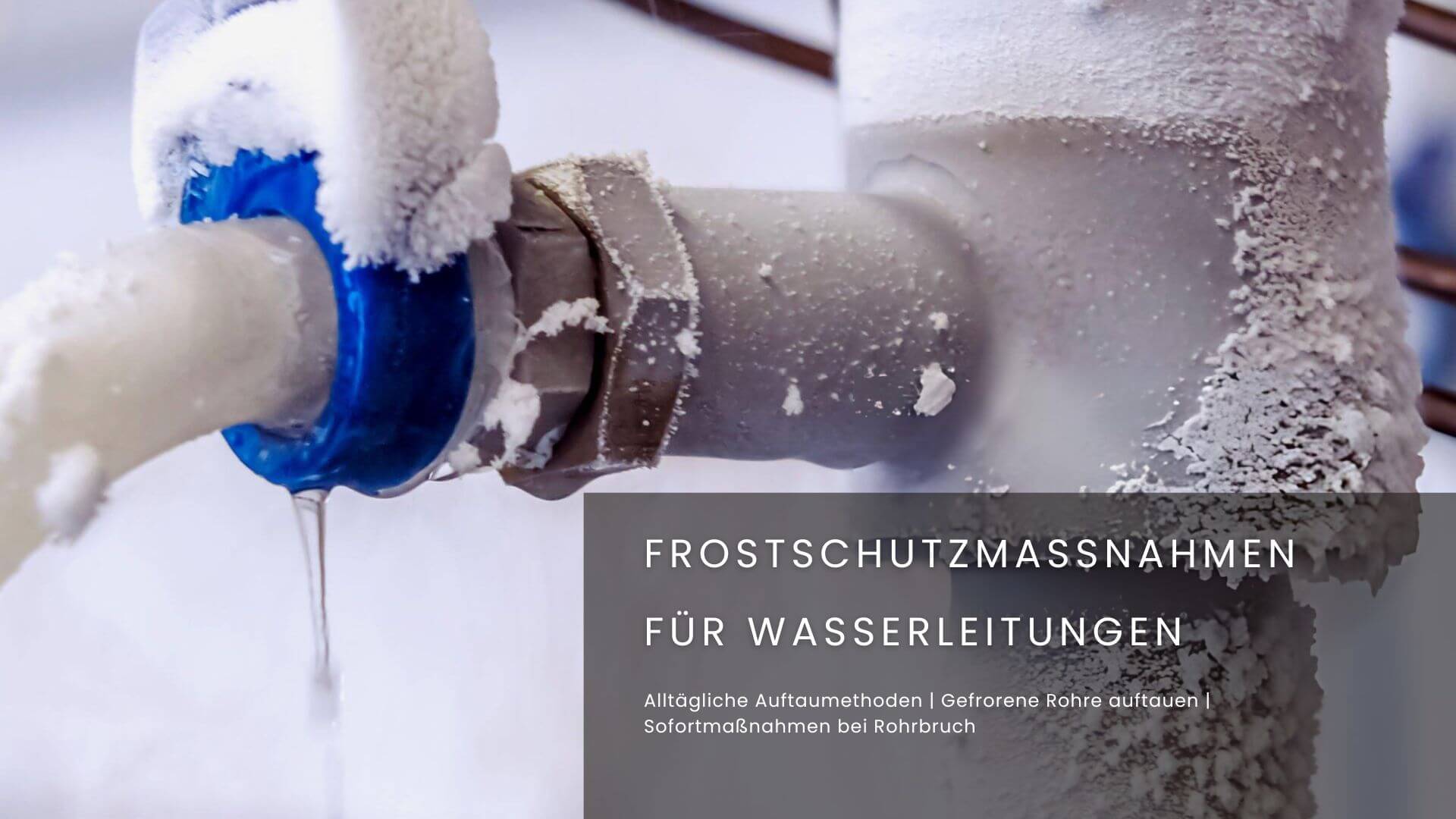
Winter is approaching surprisingly fast. When temperatures drop sharply, the risk of frozen water pipes increases significantly – which can cost a lot of time and money. In fact, burst water pipes are among the most common property damages during the cold season. In this article, you will learn how to prevent pipes from freezing, safely thaw frozen pipes, and react and repair correctly in the event of a burst pipe.
How to prevent frozen water pipes
In Germany, the risk of water pipes freezing depends primarily on the outside temperature, the location of the pipes, the pipe insulation, and the frequency of use. Water can freeze in pipes at temperatures below 0°C, but short-term low temperatures usually do not immediately lead to problems.
During sustained frost of -4°C to -6°C over several hours or days, uninsulated or exposed pipes – for example, outdoors, in the basement, or in the attic – face a significantly increased risk of freezing. In particularly cold regions, such as the Bavarian Alps, without adequate insulation or regular water withdrawal, the risk of frost damage and burst pipes increases significantly.
Some measures may contradict your natural desire to save water or reduce heating costs, but compared to the high cost of repair, the expenses are very low. You can take the following precautions:
- Maintain room temperature: Even when absent (e.g., during vacation), the room temperature should remain at least 15°C to prevent pipes from freezing.
- Insulate pipes: Use foam or insulating material for exposed or draft-prone pipes. In new buildings or particularly cold regions, frost protection heating tapes can be used, which automatically provide heat at low temperatures.
- Outdoor and rarely used pipes: Garden faucets and exposed pipes should be shut off and completely drained before winter. Pipes that are not used for a long time must be completely drained.
- Let it drip: In extremely low temperatures, the faucet at the end of the pipe can be left slightly open so that water slowly drips – this prevents the pipe from freezing.
Thawing frozen pipes
If water flows only sparsely or irregularly, a pipe is likely frozen. Be sure to thaw carefully, as damaged pipes can quickly lead to flooding.
In case of a burst pipe, immediately close the main water valve, which is usually located at the water meter or the main entrance to the house's water supply.
If the pipe is not damaged: Open the faucet. When warming the frozen pipe, water flows through the thawing ice. Even if the water is still very cold, the flowing water helps to thaw the pipe faster.
Warm the pipe: Wrap the pipe with a heating pad or heating tape. Use a hairdryer or portable electric heaters (keep away from flammable materials). Wrap with towels soaked in hot water. Do not use gas burners, kerosene or propane heaters, charcoal grills, or other open flames – high temperatures can damage pipes or cause fires.
Warm until water pressure is fully restored: Also check other faucets in the house, as other pipes may be affected if one is frozen.
If you cannot find the frozen pipe, it is inaccessible, or cannot be thawed, call an emergency plumbing service.
Immediate measures in case of a burst pipe
Many burst pipes occur because winter suddenly sets in, preventive measures were not taken, or mistakes were made during thawing. The following steps help after a burst pipe:
Turn off the main water valve: Stop the water flow to limit damage.
Clear drains: Let the remaining water drain from the pipes to prevent further damage.
Contact professionals: Call a certified plumbing emergency service for repairs and simultaneously inform your insurance company about the damage.
Prevent consequential damage: Quickly dry wet floors and furniture to prevent mold growth.
Tips
For houses left vacant for longer periods, remote temperature monitoring and a frost warning system are recommended.
For outdoor pipes, insulating materials such as frost-resistant EVA foam or rubber pipe insulation are suitable.
Regularly replace old water pipes (e.g., galvanized steel pipes) to reduce the risk of burst pipes.
In winter, regularly open faucets or let the pipes run slightly, especially at night when temperatures are low, to ensure water flow.